
Is there a “Chinese alphabet”?
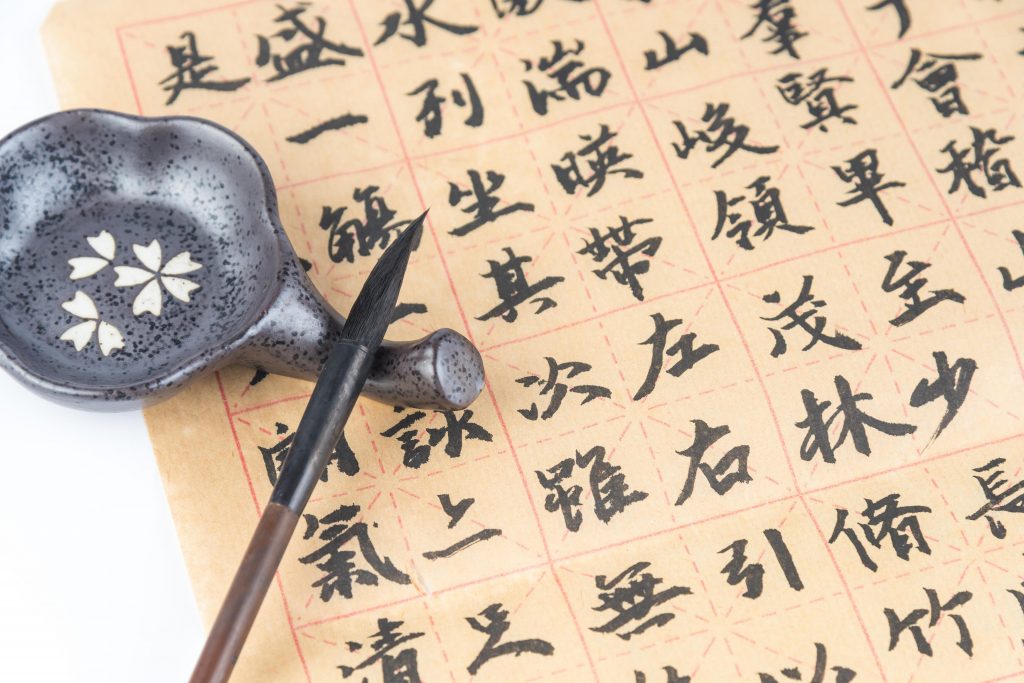
No. Chinese is written with characters (汉字 hànzì), where each character stands for a syllable and a meaning, not a single sound. There are tens of thousands of them, and about 2,500 cover most everyday reading.
What learners call the “Chinese alphabet” is usually pinyin: a system that spells Mandarin sounds with the 26 Latin letters, plus tone marks. It’s how you learn to pronounce, and how Chinese people type. There’s a full pinyin chart further down this page.
Free to start · Only 5 minutes a day
Go from letters to reading real Chinese
Each story is written for your level, so you understand it from day one. Stuck on a word? Tap it for pinyin, meaning, examples and native audio. No textbooks, no flashcards.
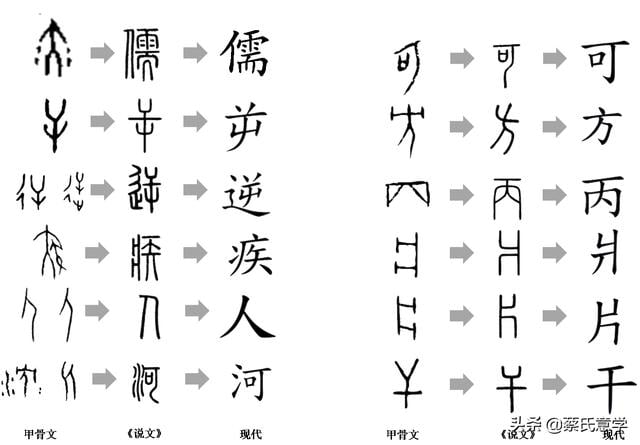
Imagine that Egypt still used hieroglyphics to this day: this is more or less how it is in China. The Chinese script is almost as old as the ancient hieroglyphs, with an impressive 5,000 years of development. During this time, it has evolved constantly, adapting to new needs. Yet these changes were slow enough that ancient texts can still be understood today, although reading them takes an excellent knowledge of Chinese and its history.
How many characters does Chinese have?
The Chinese script has almost 50,000 characters. Memorising all of them would take decades. At first glance that sounds scary, but do we really need to learn that many? As it happens, we don’t. Research shows that knowing 6,000 characters (a mere 12% of all characters in Mandarin) lets you understand almost any text. The remaining characters (as much as 88% of the entire “alphabet”) are rarely used, or only in very specific contexts, appearing in barely 5% of all texts. Even native Chinese speakers don’t know every character, because they don’t need them in everyday life. So there’s nothing to worry about.
How are Chinese characters formed?

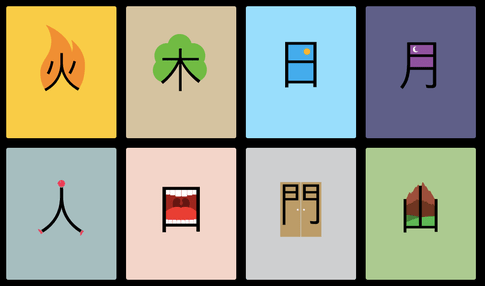
Chinese writing is a complex system, but it has a logic. All characters are built from a set of components, known as radicals. A couple of radicals form one character. In total, there are 214 radicals. They’re usually a simplified version of a very basic character, such as “heart”, “person” or “knife”. You can see some of the most common ones in the picture above.
It sounds complicated, but it really isn’t. Take a look:
- 刀 “knife”: you can see it in characters like 分 and 召. It’s simplified into 刂 when placed to the right of other elements (刖, 割).
- 人 “person”: one of the most common radicals, visible in characters like 囚 and 坐. It’s simplified into 亻 when written on the left (他, 似).
- 心 “heart”: visible in many characters, especially those about emotions or thinking, like 愛 (traditional), 思 and 德. It’s simplified into 忄 when written on the left (快, 怀).
There are many, many more. Do you have to know all of this? Once again, no! The list above just shows that Chinese characters aren’t a random collection of strokes and dots, but a deeply logical writing system. As you learn more characters, you’ll naturally start noticing the radicals, which in turn makes new characters easier to memorise.
Radicals often hint at a character’s meaning, too. Characters with 人 are often related to people (你 “you”, 他 “him”). Characters with 刀 are often about cutting or dividing (分 itself means “divide”). And those with 心 relate to emotions and thinking, like 思, “to think” or “to consider”. Interestingly, Chinese culture doesn’t treat feeling and thinking as opposites, but as closely related.
But it isn’t always that neat. More than 80% of Chinese characters are phono-semantic compounds: one part gives a broad category of meaning, and another part suggests the pronunciation. After thousands of years of evolution, every character carries traces of its meaning, sound, history and culture. That’s why it’s hard to guess a new character’s meaning, and why you need to learn it. With Chinese characters, it’s all or nothing: either you know the character and can read it, or you don’t.
The pinyin alphabet chart
Pinyin uses the 26 Latin letters to spell Mandarin sounds. Every syllable is an initial (the consonant), a final (the vowel part) and a tone.
Initials (consonants)
| Group | Letters | Note |
|---|---|---|
| Lips | b p m f | b is like the p in “spin”, p has a puff of air |
| Tongue tip | d t n l | d is like the t in “stop” |
| Throat | g k h | h is a little throatier than English |
| Flat tongue | j q x | roughly “jee”, “chee”, “shee” with a smile |
| Curled tongue | zh ch sh r | tongue curled back, as in “judge”, “church” |
| Teeth | z c s | z = “ds” in kids, c = “ts” in cats |
Finals (vowel parts)
| Group | Finals |
|---|---|
| Simple | a, o, e, i, u, ü |
| Compound | ai, ei, ao, ou |
| Nasal | an, en, ang, eng, ong |
| With i | ia, ie, iao, iu, ian, in, iang, ing, iong |
| With u | ua, uo, uai, ui, uan, un, uang |
| With ü | üe, üan, ün |
The four tones
| Tone | Example | Sounds like |
|---|---|---|
| 1st | mā 妈 (mum) | high and flat |
| 2nd | má 麻 (hemp) | rising, like asking “huh?” |
| 3rd | mǎ 马 (horse) | dips low, then rises |
| 4th | mà 骂 (to scold) | sharp and falling |
There are only about 400 syllables in Mandarin, so this chart covers everything you’ll ever need to pronounce. For the full explanation with the tone chart and spelling rules, see our complete pinyin guide.
Traditional vs simplified Chinese
You’ve probably heard of this split already. The difference between traditional and simplified Chinese is mainly about the written language. Until the 1950s, traditional Chinese was simply “Chinese”. When a simplified version of the written language was created, the older form needed a name, so it became “traditional”.
Traditional characters have been used since the Han Dynasty (206 BC–220 AD), and have changed little since then. They’re officially used in Taiwan, Hong Kong and Macau, and many people in mainland China can read them too. Simplified Chinese is, as the name suggests, a simplified version of the traditional characters. It was introduced in mainland China in the 1950s, and today it’s used in China, Malaysia and Singapore.
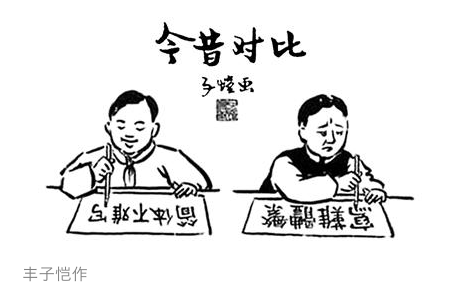
Simplified characters have fewer strokes, which makes them much easier to learn. But not every character changed: most stayed the same, and mainly the most common ones were simplified. Characters that were already simple were left alone. Simplification also reduced the total number of characters. For example, where spoken Chinese has several words that sound the same but mean different things, simplified Chinese sometimes uses one character for all of them, while traditional Chinese keeps a separate character for each. Given that characters had barely changed in around 2,000 years, the 1950s simplification was revolutionary.
Here are some common traditional characters and their simplified versions:
| Traditional | Simplified | Meaning |
|---|---|---|
| 愛 | 爱 | “Love”, “to love” |
| 後 / 后 | 后 | “After” (後) or “empress” (后, “the one after the king”) |
| 懷 | 怀 | “To miss” |
| 國 | 国 | “Country” |
| 好 | 好 | “Good” (the same in both) |
Simplified characters are easier to learn, and they helped spread literacy across a huge country. But they can carry less meaning. Look at the first one, “to love”: 愛 / 爱. They look very similar, but the simplified version has lost the radical in the middle: 心, “heart”.
Read real Chinese in 5 minutes a day
Tell us your level (or take a quick test) and get a short story written for it every day. Native audio, tap-to-translate and a 1-minute quiz, so you can see it’s sticking.
Related: What is pinyin? Complete guide with tone chart · The hardest Chinese character · Which direction is Chinese read?